Tuesday, March 20, 2012

Spring Reading Fever: A Top Ten Tuesday Post

Florence in the spring -- taken at the Buboli Gardens

While I've recently been making long-term reading goals with my epic length Classics Club list, I thought it prudent to also conjure up some short-term plans so as not to feel buried under an ever growing TBR pile. Serendipitously, this week's Top Ten Tuesday prompt from The Broke and The Bookish is all about spring reading. Therefore, I have whipped up a list -- oh, how I adore making lists -- of books that I'm hoping to get to as the sun and greenery emerge from their wintry hibernation. 

Since I plan on participating in a Victorian event during June and July, I intend to spend the next couple of months concentrating on texts written outside of that sixty-odd years of Victoria's reign. By which I mean, this list contains only two Victorians, so I've reined myself in nicely. I even feel a bit guilty for not including more of them here and have this nagging feeling that I've done something wrong or illicit. Ah, Victorian guilt!

It's highly doubtful I'll complete the list (particularly since I'm not including titles through which I'm currently wading), but it's nice to have an idea of where I'd like to direct my literary attention over the coming weeks.

The Wind in the Willows by Kenneth Grahame 

This classic children's novel seems like the perfect read for spring! Just thinking about the lovely pastoral representation of rural England makes me eager to spend time outdoors, one with nature. 

Perhaps I shall read it over a picnic! (I won't. But it's a nice idea.)

And while this doesn't have anything to do with anything, I loved Lady Violet's protestation to Edith's driving in an episode of Downton Abbey, stating that granddaughter wasn't 'Toad of Toad Hall.'

Adam Bede by George Eliot

Suffice it to say I'm a fan of John Thornton in Elizabeth Gaskell's North and South. So when I heard that readers possess the similar attachment to the eponymous Adam Bede, I knew I had to read it. I hope it's as fabulous as I've heard it is. 

Does anybody out there harbour a crush on this fictional character?


Drowning Ruth by Christina Schwarz

A dear friend and kindred spirit chose this novel for my book club's March read. The group is definitely enjoying it, so I'm looking forward to immersing myself in its pages. 

Do I get bonus points for reading a contemporary novel?


Rebecca by Daphne Du Maurier 

'Last night I dreamt I went to Manderly again.' I know the opening line. I know it's inspired by my beloved Jane Eyre. Yet I have not read it. My head hangs in self-reproach as I type this.

Seriously though, I'd love to properly dig into Du Maurier's fiction. My grandmother just lent me beautiful copies of My Cousin Rachel and Jamaica Inn, the latter apparently reminiscent of Wuthering Heights. But I have to read Rebecca first.
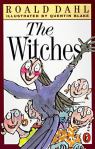

The Witches by Roald Dahl

My recent post on this fantastic author produced great feelings of childhood nostalgia. I'm hoping that experiencing a never-before-read Dahl text will result in the same feeling of wonder I felt when reading Charlie and the Chocolate Factory or James and the Giant Peach as a wee one.  

The film adaptation terrified me when I was young. Perhaps this is why I've never bothered to read the book. 


Victorian London by Liza Picard

I'm heartily enjoying my attempts to incorporate more non-fiction into my reading this year and would rather like to continue the practice. Liza Picard has written several portraits of London at various time periods in British History (I've read bits of her Restoration London), so I'm looking forward to experiencing that foggy Victorian metropolis through her words. 

Question: will I need an umbrella? No, a gas mask, I think, would be the order of the day -- the odour.    
                                         
Patronage by Maria Edgeworth

A contemporary of Jane Austen, Maria Edgeworth was wildly popular in early-nineteenth-century England. Patronage apparently sold its first run within hours. It's now largely out of print, so I snapped up this new edition by Sort Of Books at a Waterstone's in Leeds.

Known for her progressive views on race and gender, I'm excited to compare her representation of Regency society with those by Austen.    


Crossed by Ally Condie

Sometimes a girl needs a good escapist read. I enjoyed Matched, the first in this young adult trilogy. 

Hopefully the second installment will maintain the narrative momentum the author's got going.  

Bring on the love triangle!


The Mating Season by P.G. Wodehouse

I haven't read a Wodehouse novel in nearly six months! Naturally, this leads me to believe I am slowly dying on the inside and must restore a healthy balance to my anatomy with another Wodehouse text. As everybody knows, Wodehouse makes everything right in the world.

As I've previously confined myself to Blandings Castle stories, The Mating Season will be my first Jeeves novel. Such joy! (Click here for a hilarious passage from a Blandings novel.)


The Professor by Charlotte Brontë

So...I'm embarrassed to admit this, but I've never read The Professor. Like so many books, I started this assigned reading for my Brontë module at Leeds. However, I arrived in England a week late due to visa delays and other bureaucratic delights. Consequently, I never finished it. Shame! This is the only Brontë novel I haven't fully read, and I need to get on it. I can't wait to witness what I've termed  Charlotte Brontë Syndrome in full swing! 

  
Do you have any fun reading plans for spring? What are your thoughts, if any, on the titles I've listed above? Are you currently engrossed in a good book right now? Pass on the recommendations!

Monday, March 19, 2012

The Enigmatic Bard: Bill Bryson's Shakespeare


One of my New Year's resolutions was to make time in my reading schedule for some author biographies; Shakespeare: The World as Stage by humourist Bill Bryson was a fantastic place to start. What impressed me most in this book on Shakespeare is how little we actually know about Shakespeare. He remains an enigmatic and mysterious figure. Most likely he always will. Renaissance documentation being what it was -- and in the distant past -- the remaining accounts of him are few and far between. Hold your horses, authorship conspiracy theorists, we don't know much about any playwright from that era. In fact, Bryson informs us that scrupulous research has yielded more insight into The Bard than the majority of Elizabethan and Jacobean personas such as Thomas Dekker, Inigo Jones and even Ben Jonson. 

To make up for this lack of biographical detail, Bryson contextualizes this work of non-fiction with an amusing yet educational portrait of life in Renaissance England, particularly that burgeoning and putrid metropolis London. If we can't confirm what precisely Shakespeare was doing, we can at least make conjectures about what his day-to-day life as an urban player must have been like.

And what a life it was! Bryson provides enough detail about the period to satisfy my ardent curiosity. I loved learning about the strict codes of Renaissance dress. Rain apparently caused mass panic; people rain for cover to protect the delicate dyes of their clothing. Early Modern England conveyed an indifference for spelling and grammar -- nobody could even be bothered to adhere to consistency in signing their own name, Shakespeare included. None of Shakespeare's signatures on record conform to the spelling that has universally been assigned to him. The growing metropolis was plague-ridden and filthy. Londoners paid a great price for urban life, as life expectancy was short. Bryson notes that making it to one's early thirties was 'a reasonable age for a dying Londoner.' What a fascinating time period!

At approximately 200 pages, this biography is by no means exhaustive. Those seeking a more scholarly approach to Shakespeare should look elsewhere. Nevertheless, I found Bryson's contribution to our cumulative knowledge on The Bard to be adequately educational. For someone like me who knows little about the period in question, Shakespeare: The World as Stage was precisely the introduction to Renaissance biography I needed. The dry humour for which Bill Bryson is noted was apparent throughout, infusing each chapter of the biography. Being a novel addict, I was worried that I would struggle through this text. I needn't have. Bryson captivated my attention from the opening pages. Indeed, his enthusiasm for the subject was contagious, causing me to spew Renaissance 'fun facts' to my family without the slightest provocation. And now I'll adding a few of these fascinating tidbits to this blog post. I just can't help myself. If you're the least big interested, please read on...


* Those attending Early Modern theatre could expect a fair degree of gore. Animal organs were used as props in violent death scenes. Swords were dipped in sheep's blood for a touch of violent realism during staged fights. Additional blood and fake limbs were strewn around to set the stage.

* The history of Shakespeare scholarship is almost as intriguing as the plays themselves. Charles and Hulda Wallace took it upon themselves to sift through Early Modern records in the hopes of locating information about Shakespeare -- to considerable success. Unfortunately, Charles became rather paranoid as a result of his obsession and even 'believed that the British government was secretly employing large numbers of students to uncover Shakespeare records before he could get to them' (p. 15). Other critics have suggested, due to two minor allusions to lameness in the Sonnets, that Shakespeare must have been crippled. Naturally.

* The violence on the stage could, and did, extend to the audience. Bryson reports that real bullets were used in theatrical fights -- why, neither Bryson nor I can imagine -- and we know that a cannon was responsible for the fire that resulted in The Globe's destruction. Theatre-goers could even procure seating on the stage at some venues for an additional fee. 'The practice was lucrative; but it contained an obvious risk of distraction. Stephen Greenblatt relates an occasion in which a nobleman who had secured a perch on the stage spied a friend entering across the way and strode through the performance to greet him. When rebuked by an actor for his thoughtlessness, the nobleman slapped the impertinent fellow and the audience rioted' (p. 139). Can you imagine if fights broke out at the cinema today? Saying that, I can imagine Team Edward and Team Jacob fans fighting to the death at a Twilight showing...

* James I was, according to Bryson, an uncouth gentleman. He was known back then (which is saying something) for his bad hygiene. Leftovers from his meals stained his clothing, and he frequently indulged in the bad habit of playing with his codpiece in public. How charming.

* 1592 marks the first recorded mention of Shakespeare as a playwright, in a decidedly unflattering pamphlet called Greene's Groat's-Worth of Wit. Bryson is not a fan of its author, Robert Greene, calling him 'a wastrel and cad' (p. 83). Indeed, he manages to sneak in an insult or two aimed at Greene who, in turn, insulted Shakespeare in his pamphlet. One example of such a dig: 'Only two copies of Greene's Goat's-Worth survive, and there would not be much call for either were it not for a single arresting sentence [referring to Shakespeare] tucked into ones of its many discursive passages' (p. 84). Needless to say, Bryson's shrewd commentary delighted to me.

* I had no idea that spelling and grammar was so universally inconsistent in Early Modern England. This information astounded me! More than eighty spelling of William Shakespeare's name, for instance, have been recorded. I'll turn over to Bryson for further elucidation: 'People could be extraordinarily casual even with their own names. Christopher Marlowe signed himself "Cristofer Marley" in his one surviving autograph and was registered at Cambridge as "Christopher Marlen." Elsewhere he is recorded as "Morley" and "Merlin," among others. In like manner the impresario Philip Henslowe indifferently wrote "Henslowe" or "Hensley" when signing his name, and others made it Hinshley, Hinchlow, Hensclow, Hynchlowes, Inclow, Hinchloe, and a half dozen more' (p. 111).

I'll put an end to these fun facts now, before I bore anybody to tears -- if anyone has even managed to make it this far! In short, Shakespeare: The World as Stage was a pure delight. It makes me eager to read more Renaissance authors (I've got Marlow and Jonson on my list), as well as further my Shakespeare education. Have you read any Shakespeare biographies? Did you enjoy them? I'd love to hear!

Wednesday, March 14, 2012

The Classics Club


I'm thrilled to announce that I will be participating in The Classics Club, recently established (and hosted) by Jillian at A Room of One's Own. After much deliberation, I have finally formed a list of 100 works of fiction I hope to have read in six years time. I have also whipped up short little lists of poetry, drama and non-fiction selections to be read alongside my fictional titles. You can view my page dedicated to the project to see my chosen texts.

Making The List required great restraint on my part, because it quickly turned into a Bookish Bucket List. I reminded myself that I didn't need to include every book I'd like to read before I die in this five-year plan. Giving books I already own the priority has helped me to narrow things down significantly.

I've also tried to give my project a sense of balance. True, the majority of my chosen texts are from favourite time period: the long nineteenth century. This was deliberate, as I really want to delve deeper into my beloved Victorian and Romantic eras. Nevertheless, the list ranges chronologically from the Renaissance to the contemporary. There are numerous children's books, and I've attempted to include some American and French authors into my reading. Some are tried-and-true classics, while other selections are non-canonical. In some cases, I'm attempting to include an author's entire oeuvre (e.g., Jane Austen, Charles Dickens, the complete Sherlock Holmes), and I'm also adding one or two texts from authors with whom I've yet to be acquainted (Flannery O'Connor, Nathaniel Hawthorne). I think this list represents the breadth of reading I hoped to achieve. Bring on the literary adventure!

I have no intention of reading exclusively from this list over the next six years -- it may even alter as time goes by. Rather, the purpose of my participation in The Classics Club is to focus my reading and give me an opportunity to discuss literature with people who share a similar love of the classics. I'll be sharing my literary opinions and reading experiences along the way. While it's aimed primarily at bloggers, anybody is welcome. Please consider joining in the fun. (Click here for more information.) Happy reading, everybody!

Tuesday, March 13, 2012

The Magical 11: Benedict Cumberbatch and Other Tidbits


Cassandra from Literary Stars and Preethi from Lace, Etc. recently tagged me, urging me to complete The Magical 11 blog post. In it, we are meant to share eleven random facts about ourselves, as well as answer the eleven questions set forth by the tagger.

11 Fun Facts

1. Like most of Britain, I have a crush on Sherlock star Benedict Cumberbatch (pictured above). I'm still waiting for America to catch on to this obsession. Wake up, patriots! He's the next big thing.

2. Reader's confession: I'm not keen on reading poetry. However, I love listening to it as it's read aloud. This, I firmly believe, is how poetry is meant to be experienced. It's music to the ears.

3. Geek alert: my reader friends and I love a man with (and this is a direct quote) 'a sexy reading voice.' Yep, we're nerds like that. Before you make fun, I dare you not to melt while listening to Benedict Cumberbatch's recitation of John Keats's 'Ode to a Nightingale.' Never underestimate the power of the Sexy Reading Voice.

4. Apparition would undoubtedly be my superpower of choice. Wouldn't it be fabulous to go wherever one wanted in an instant? No expensive flight fees, no customs and immigration, no jet lag. I get giddy just thinking about it.

5. I love romantic comedies, but the genre has degenerated into tripe in recent years. What happened to witty classics like When Harry Met Sally?

6. I plan on naming any future children after beloved authors and/or literary characters. I've done this with my pets since I was a wee girl (RIP Watson the Hamster).

7. I refuse to eat anything that lived in water. The flavour that results is too awful for me to stomach. I was even put off vegetarian sushi because of the seaweed. Ick.

8. I've dreamt of a Jane Austen-inspired wedding dress since I was fifteen. At this point, I wonder if I want the dress more than the husband. Something along the lines of this:


9. I prefer to watch television series on dvd, when I can watch an entire season in one go. My current favourite is Parks and Recreation. It's similar to The Office (U.S. version) but far more consistent. I highly recommend watching it.

10. People seem to have a lot of preconceptions about the Marquis de Sade, but I maintain his fiction is unintentionally hilarious.

11. I'm obsessed with literary travel destinations. Right now I'm dreaming up a visit to Louisa May Alcott's home. I fell in love with Orchard House as a twelve-year-old and have been dying to see it for myself ever since I learned it was a 'real' place.

Orchard House

Cassandra's Questions

1. If you could live in any age (present day included) you wanted to, which would you choose? Definitely the present day! While my obsession with all things Victorian has been well documented, the 1800s weren't the best time to be a woman: you couldn't vote, legally lost your property upon marriage, your husband could beat you and there were no tampons (sorry about the TMI, but facts are facts). Yes, the dresses were fabulous, but could a perpetual sloucher like me endure the constricting corsets? Probably not. If they ever invent a time machine, though, Victorian London is where I'll head first for a day on the town.Then I'd attend a Regency Ball in the evening.

2. Is there a literary character you identify with?
Yes! Depending on my mood and the situation wherein I find myself I am: Elizabeth Bennet, Anne Shirley, Jane Eyre, Lucy Honeychurch, Hermione Granger, Agnes Grey, Anne Elliot, Margaret Hale, Jo March, etc., .etc., etc. I hope to grow into an Aunt Betsey Trotwood as times goes by.

 I wouldn't mind being Lucy Honeychurch in this particular moment

3. The world is divided into two different kinds of people: those who plan their own funerals and those who don't. To which do you belong?
I am firmly placed in the latter category. I confess I find the idea of planning one's funeral without any particular impetus rather morbid. It's a little too Harry Burns for my taste (see my reference to When Harry Met Sally above). 

4. If you could live anywhere in the world, where would that be?
Right now, I'd like to live in both England and America, popping back and forth whenever I pleased. Unfortunately, such a lifestyle is rather expensive.

5. How do you manage the balance between reading and going out?
The trick, I think, is to acquire friends who read. Then nights at the pub become hours-long conversations about literature and other fascinating topics. If anything, time spent with friends encourages me to read even more.

6. What is your favourite quote? 
'The person, be it gentleman or lady, who has not pleasure in a good novel, must be intolerably stupid.' I adore these words from Jane Austen's Northanger Abbey. At the time they were obviously intended to defend the author's use of the rising form of the novel. But I still think they're as applicable today, though in a different sense. People don't seem to read like they formerly did. I'm grateful that blogging has connected me with other avid readers.

7. The eternal question: which is better, Oxford or Cambridge?
Oxford. I've visited Oxford a couple of times and have been absolutely enchanted with it, whereas I haven't experienced Cambridge yet. Random tidbit: I came across the most hilarious street name in Oxford: Toot Hill Butts. The jokes that could be made about that one...

8. Is there a song which has special meaning to you?
Ooh, this is a tricky one. Going along with my discussion of pond hopping above, I would say 'Transatlanticism' by Death Cab for Cutie. It's a fabulous, underrated song.

9. What is your favourite quote?
I'm thrilled to get another shot at this question. Jane Eyre is full of memorable quotes, but I particularly love when Jane asserts the following:

This Jane Eyre necklace on etsy is fabulous

Also, I love Polonious's word in Hamlet: 'This above all: to thine own self be true.' Words to live by.

10. Romantic comedy or thriller?
I already answered that one above, but I will expound upon it by saying that, as a naturally anxious person, tense thrillers and horror films are my personal hell. I expend a great deal of effort to calm myself, why would I then pay money to undo all my hard work?

11. Why do you read? 
I read, because literature is my life. My education, travel opportunities, life experiences and dear friends have often been the result of my love of literature, the consequence to my pursuit of it. I wouldn't be the person I am today if I hadn't read the books I've read -- and will read!

Preethi's Questions

1. What is your favourite song from high school? Ooh, tough one. I'd have to say 'I Love You' by Sarah McLachlan. It was a favourite as soon as I heard it on my teenage drama of choice, Roswell.

2. If you could travel anywhere in the world where would it be? I want to go everywhere! In Europe, I'm dying to go to Vienna, and I still haven't been to Edinburgh. Worldwide, I'd say Africa. I have this vision of myself arrayed in khaki and a wide-brimmed hat, pulling out the binoculars on a safari. But I'm slightly allergic to mosquitoes. It could be tricky to pull off.

Oh, this would be fabulous!

3. What would be your ideal birthday gift? A library. Or a puppy. Or a one-way plane ticket to England. I'd happily accept any of the above.

4. What is your favourite time of day? Just before sunset. I love the cooling temperatures at this time of day in the summer, the soft light and the long shadows that fall over everything.

5. What is your favourite article of clothing? I have great sentimental attachment to my University of Leeds hoodie.

6. What is your favourite thing to drink? Coke! Oh, how I love it. Unfortunately, I had a stomach ulcer some years ago that will flare up at the slightest provocation. Caffeine, consequently, is a rare treat for me.

7. What is one skill you'd like to learn? I love classical music, particularly pieces which feature strings and the piano. I play the latter quite poorly, but I'd love to learn to play the cello. It's on The Bucket List!

8. What was your favourite summer job? My favourite summer job was lounging during the day and having sleepovers at night. Somehow I missed out on the summer job rite of passage.

9. What was your favourite childhood cartoon? Duck Tales. Oh, I wanted to be Webby and swim in Uncle Scrooge's sea of gold. Funnily enough, I never understood the majority of the lyrics to the opening song apart from the emphatic 'Duck Tales' that came at the end of each line. Also, Alvin and the Chipmunks. I still love listening to the Chipmunk Christmas Album. I don't care what anybody says, they're cute!

10. What's your favourite family memory (either growing up or recently)? I love vacations with my family. We're all slighty -- and I think adorably -- neurotic, so vacations really bring out the melodramatics. I have memories of getting lost in Hawaii, because my dad was bewildered by Honolulu's one-way roads, my brother declaring that he wanted his Disneyworld souvenir to be a battleaxe, my mum getting upset when my dad purchased samurai swords at a flea market for a ridiculous sum (that are now gathering dust somewhere in our house). Family vacations are always memorable if somewhat insane.

At a luau on the island of Oahu

11. Do you like nicknames? Yes, we go a bit crazy for nicknames in our family. I have been called the following throughout the years: Di, Nana, Dinana, Dinananana and Diana Banana. Di is my diminutive of choice, but it drives me nuts when people I don't particularly like call me that -- one has to be a friend or family member before I'll allow them the privilege. We also have an array of nicknames for Percy: Perceval P. Pup (my dad's invention), Pooker, Pooker Pooh, Pooks, Perc, Persnickety, The Perconator, The Poodler, and so on. I could continue, but I won't subject anybody to a full catalogue.

I won't tag anybody, since Cassandra tagged many of our fellow blogging friends. But I'd love to hear any answers to these questions in the comments below!

Thursday, March 08, 2012

Thoughts on Roald Dahl – and Commemorative Stamps

The Royal Mail is issuing these charming Roald Dahl stamps, featuring the original Quentin Blake illustrations. I'm not a stamp collector, but I would willingly snap up this literary keepsake in a heartbeat! Aren't they adorable?

Seeing these has reminded me how much I loved reading Roald Dahl novels as a child. Charlie and the Chocolate Factory, Charlie and the Great Glass Elevator, James and the Giant Peach: these stories delighted my young imagination. Unfortunately I never read Matilda, but I have a feeling it would still be magical reading for adults -- particularly an adult like me who adores children's literature.

My favourite Dahl narrative would have to be Fantastic Mr. Fox. Though it's quite short and aimed at early readers, I wasn't introduced to this charming story until I was ten. Luckily, my fourth grade teacher firmly believed one should never 'outgrow' children's books and happily passed it on to my class. I was immediately drawn in by the cunning of Mr. Fox and the grotesque habits of the three farmers who attempt to put a stop to Mr. Fox's habitual pilfering of their resources. I still recall the rhyme about these unhygienic farmers:

Boggis and Bunce and Bean
One short, one fat, one lean.
These horrible crooks
So different in looks
Were nonetheless equally mean. 


I always recommend this humorous tale to my friends with children and often give it as a gift. This story, as is generally the case with Dahl's work, possesses a magic that has to be shared.

Did you read Roald Dahl novels when you were young? Which was your favourite?

P.S. Wes Anderson's adaptation of Fantastic Mr. Fox is, well, fantastic -- for adults and children. Since the source material is brief, I forgive the liberties he takes with the text. You can watch the trailer here.

Wednesday, March 07, 2012

Judging a Book by Its Cover, A Top Ten Tuesday Post


I'm a bit late to the game on this one, but Jillian's post has inspired me to join this week's Top Ten Tuesday event hosted by The Broke and the Boookish. So I'm sharing my top ten favourite book covers, united by a theme of my choosing. This topic ties in perfectly with some thoughts I've been having recently about the old adage 'don't judge a book by its cover.'

I do just that and more often than I'd like to admit. I can't count how many times I've purchased a book simply because 'it's pretty' -- pretty being my adjective of choice when I impulsively splurge on yet another book I can't afford. This practice isn't always to my benefit. Sometimes I toss a 'pretty book' to the side after reading, realizing I've been the dupe of a clever design and marketing strategy.

Sometimes I get lucky.

Once upon a time, I had no intention of reading more of Charles Dickens's novels. My horrid remembrances of having Great Expectations forced upon me in middle school put me off him for good. Then these gorgeous clothbound editions of Penguin classics suddenly popped up on the shelves of the bookstore where I worked. This book lover was entranced by Coralie Bickford-Smith's stunning designs. I walked by that beautiful copy of Great Expectations, the very book I loathed beyond description, day after day. It called out to me every time I passed by, begging to be chosen. Finally, I caved and bought the damn thing -- it was just so pretty. (Are you noticing a trend with the pretty?)

Maybe, I thought, Dickens isn't so bad after all. Maybe I've misjudged him. While I thought about it, I picked up the clothbound Oliver Twist to accompany its Dickensian sibling. Just in case.

As the abundance of Dickens-themed posts on this blog will testify, I grew to love the author I previously despised. I credit Coralie Bickford-Smith with igniting that gradual change of heart. It was her 'pretty' book that urged me to give Dickens another chance. In honor of her influence on my reading habits, I would like to share ten of my favourite classic designs by Coralie Bickford-Smith. I own several of the series now and have every intention of adding to my collection.


I love the chandeliers on this cover of Great Expectations. The designs created for Charles Dickens texts are particular stellar.


The pocket watch, which Oliver is taught to steal under the tutelage of the Artful Dodger and the rest of Fagin's gang, seems like the perfect image to represent this novel. I'm admire all of the designs in this series, but Oliver Twist might be my favourite of the bunch.


The image of the birdcage is such a potent one in Bleak House. Miss Flite owns a menagerie of birds, whom she says will be released on the day of judgement. It also, I think, serves as an effective symbol for the ways in which various characters of the novel metaphorically cage themsleves to a limited existence through their obsessions with the case of Jarndyce and Jarndyce.


The knitting needles, I presume, are a direct reference to Madame Defarge. She has the stillness of the lion before it strikes. Her eerie calm, as she quietly sits knitting, presages the violent outbursts that occur later in the novel. She is a standout character in the fantastic A Tale of Two Cities. Indeed, Madame Defarge is one of my favourite characters in the whole of Dickens's oeuvre.


I'd been lusting after this edition of George Eliot's Middlemarch for months when my dear friend Liz gave it to me as a parting gift before I left England. Therefore, this design has a lovely sentimental value for me.


Clothbound editions of all Jane Austen's completed novels have been released. The intricacy of this design for Pride and Prejudice makes it, in my opinion, the best of the six.


Illustrating the flamingos who have day jobs as croquet mallets in Lewis Carroll's Alice's Adventures in Wonderland is pure brilliance. I love the bright-pink-on-white color scheme.


The peacock feather motif on this cover of The Picture of Dorian Gray by Oscar Wilde is simply gorgeous.


The design of Emily's Wuthering Heights is another favourite of mine, probably because the image of the rose illustrates the relationship between Cathy and Heathcliff nicely. It's beautiful but full of thorns. If Cathy and Heathcliff aren't prickly, I don't know who in fiction is.


And finally...Charlotte's Jane Eyre. I have a soft spot for this cover, because Jane Eyre may possibly be my favourite novel of all time. Also, it's red, a color that makes everything vibrant.


Penguin hosted a live web chat with Coralie Bickford-Smith a few months ago, and she kindly answered my question about the extent to which the narratives of the novels influence her designs. It was fascinating to hear about the creative process behind this aesthetic series. Here is her reply:

I try to read all the books I design covers for but sometimes (due to time constraints) it is just not possible and I go to the blurbs team for a chat to bounce ideas off. For me the narrative influences my creative process massively. For the hardback classics some of the final patterns are more literal than others. The peacock feather on Dorian Grey, for example, plays on the book’s themes of vanity and the superficial, whereas the leaf motif on Jane Eyre, refers directly to the lightning-blasted chestnut tree, a concrete element in the text that serves as a potent symbol of the book’s central relationship.

So, buying books simply because they would look dashing on my shelves does occasionally lead me astray. Yet it has also opened my eyes to fabulous books I wouldn't otherwise have read and helped me to reconsider my opinions on literature. Judging a book by its cover is a practice I'll happily continue.

Do you ever embrace or reject books simply because of their covers? I'd love to hear! 

Monday, March 05, 2012

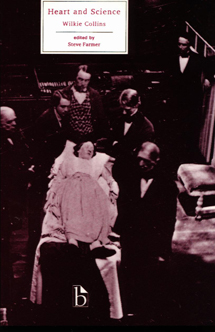
Heart and Science by Wilkie Collins


Heart and Science is my first experience with Wilkie Collins. As a Victorianist, I've been meaning to familiarize myself with this key novelist of the period for some time. Collins is well known for his novels The Woman in White and The Moonstone, where I originally meant to start, but the illustration of Victorian scientific debates in Heart and Science quickly drew my attention. I actually began this novel ages ago (and briefly commented on it in a previous post), but the expiration of my university library privileges meant that I was forced to return the book partially read. Luckily, I was able to acquire a copy from another library, finally allowing me to see this intriguing plot to the end.

The novel revolves around the recently orphaned Carmina Graywell. Raised in Italy, she returns to England where she will be under of the guardianship of her paternal aunt Mrs. Gallilee. Ovid Vere, Mrs. Gallilee's son by a previous marriage, immediately falls in love with his benevolent cousin and the two quickly become engaged. Unbeknownst to Ovid or Carmina, Mrs. Gallilee is on the brink of financial ruin. Dependent on the vast sum of money that is allocated to her while Carmina remains under her care, she maliciously resolves to tear the pair apart through manipulative methods of subterfuge in order to retain access to Carmina's inheritance.

Knowing that the bulk of Wilkie Collins texts are classified as sensation fiction, I was expecting the plot to be more...well, blatantly sensational. True, there are faintings fits and bouts of madness galore. But for the most part, the conflicts between the characters are fought through subtextuality. Mrs. Gallilee will tell the family's governess Miss Minerva A, by which she really means B. Miss Minerva, realizing that Mrs. Gallilee is hinting at B though she says A, will respond with C, by which she really means D. It can render passages of dialogue a bit confusing at times, but the manifestation of such passive-aggressive tension is also very interesting for the reader.

Wilkie Collins

Because Wilkie Collins and Charles Dickens were great friends and colleagues, I idly wondered before diving into Heart and Science if Collins's representation of women would coincide with that of his BFF. As I've expressed before, Dickens's heroines aren't the multi-faceted women I would like to see in fiction. Rather, many of them (e.g., Lucy Manette in A Tale of Two Cities) seem to be an incarnation of his angel-of-the-house fantasy. I'm happy to report that Carmina Graywell didn't fall into that category for me. She is unbelievably kind, continually placing a faith in others that could be foolhardy but instead wins her friends wherever she goes. When the situation calls for it, however, she stands up for herself. She defies Mrs. Gallilee in spite of the threats her aunt employs in an effort to subdue her. But Carmina won't be subdued. She is an illustration of how a Victorian heroine can be traditionally feminine yet strong.

As I mentioned above, I was initially drawn to Heart and Science for its engagement with Victorian science. Vivisection, experimentation on living animals, was widely practiced and hotly debated at the time. Dr. Benjulia, a friend of Mrs. Gallilee's, becomes interested in family affairs as a result of his fixation on brain disease. He also secretly practices vivisection in his laboratory, hoarding an array of unfortunate animals for the purpose. Chapter 32 is a discussion of vivisection, in which Collins carefully inserts many of the arguments against this cruel practice. Benjulia's words on the subject, and why he chooses to indulge in vivisection, are chilling:

Have I no feeling, as you call it? My last experiments on a monkey horrified me. His cries of suffering, his gestures of entreaty, were like the cries and gestures of a child. I would have given the world to put him out of his misery. But I went on. In the glorious cause I went on. My hands turned cold -- my heart ached -- I thought of a child I sometimes play with -- I suffered -- I resisted -- I went on. All for Knowledge! all for Knowledge! (p. 191)

I loved the exploration, one still relevant today, of what we are willing to sacrifice for the advancement of science and technology. Are we paying too great a price?

These analyses aside, Heart and Science is a fast-paced, enjoyable read. It left me eager to explore more of Wilkie Collins's texts as well as sensation fiction by female authors, namely Lady Audley's Secret by Mary Elizabeth Braddon and East Lynne by Ellen Wood. I'm interested to see how the genre is represented by women. Are the generic trends essentially the same, or do they differ based on the gender of the author? If you've read them, I'd love to hear what you think as well as any sensation fiction recommendations!

Sunday, March 04, 2012

Charles Dickens on the Runway


One side effect of my fixed status as a bookworm is the absolute delight I feel when classic literature seeps into contemporary culture. Whether it's manifested through kitschy comics or Colin Firth in a wet shirt, I find it comforting to know that the literary works I hold so dear still influence the world today. I was, therefore, thrilled to come across this article which charts the marked Charles Dickens inspiration on this season's runway. The photos below highlight a few of my favourite Dickensian-styled pieces.

Left: Prabal Gurung; Right: Marchesa

According to the article, the designers responsible for these looks cited Miss Havisham from Great Expectations as the muse for their collections. Both convey the whimsicality that I associate with Dickens's eternal bride-to-be. The girl on the right, in particular, is Victorian bridal meets twenty-first century. I love that lace!


I would sport a ready-to-wear version of these ensembles in a hearbeat! The velvet waistcoat and overcoat with floral ascot and tailored skirt won me over at first glance. It's like a female-friendly revision of the Victorian chap.

Does your taste in literature influence your taste in fashion? I, for one, have been dreaming of an empire-waist, Austen-inspired wedding dress since I was fifteen!

Friday, March 02, 2012

Brontë News and Other Distractions

My beloved Charlotte

As of late, I've been keeping myself busy with numerous applications. Revising writing, whipping up CVs, filling out form after form: it's been quite the process. Throughout I've received good news and frustrating news, and there is much more of it to come. I tend to take the bad news to heart, so I'm trying to keep faith as I complete yet another application that all will turn out as it should. The down side to all of this is that it's kept me from writing the posts I was hoping to get up this week. I've read some fantastic literature lately, my thoughts on which I'm dying to share, not to mention that Dickensian literary pilgrimage I have yet to fully document. These will keep until my days become less hectic.

Perhaps the most exciting news this week for a Victorian geek like me is the revelation that a piece of lost writing by Charlotte Brontë has recently been discovered. 'L'Ingratitude' -- apparently filled with inconsistencies in French grammar -- is now the earliest instance we have on record of the homework assigned to her by Constantin Heger, the professor with whom Charlotte fell desperately in love. Although he was married, Charlotte sent him numerous love letters, much to the chagrin of his wife. This episode in Charlotte's life led some fellow MA students and I to coin the name of a new disease: Charlotte Brontë Syndrome. CBS, as it is commonly referred to, is a condition in which the patient suffers from an acute and unrealistic attachment to a tutor or mentor, usually of the academic variety. Symptoms include emotional outbursts and inappropriate revelations. And guys, it's totally a real disease. 

But I digress.

It thrills me to no end that lost manuscripts by beloved authors are still being discovered. Can you imagine stumbling upon one, hidden amongst that junk in the attic? I would love to find that lost novel Emily supposedly wrote or a forgotten novel by Jane Austen. At this point, such revelations are unlikely, but a reader can dream, right? Which author's work do you secretly hope we find more of? I would love to hear!