Showing posts with label Bronte. Show all posts

Tuesday, January 22, 2013

Overwhelmed


To say that I am currently feeling overwhelmed is an understatement. Professionally speaking, I have quite a bit on my plate at the moment: conferences to apply for, conferences papers that have been accepted need to be revised, student essays must be marked, funding applications filled out, proposals finetuned.

Unforunately, all these tasks seem to be engendering perncious thoughts of self-doubt that attack at the most inopportune times: am I any good at teaching? isn't this conference abstract pure rubbish? who will ever fund this drivel of words masquerading as a proposal? am I doomed to fail at everything in life?!

Oh, the melodrama!

At times like these, I always feel a strong desire to run away, to distance myself from the unpleasantness of a difficult situation. Right now I want to be on the moors, channeling Emily, Charlotte and Anne; especially Emily, who often escaped there herself. Provided a magical internal heater would protect me from all the wuthering, I'd love to sprawl out as the squishiness of the botanical life beneath provides comfortable cushioning, watch the clouds pass overhead and forget these nagging worries. Just simply be.

Then I remember it wasn't too long ago that I didn't have the luxury of stressing myself out about lesson plans or conference presentations. I didn't get to teach and I didn't get to share research with an academic community. While I definitely need to prioritize and work on stress management, isn't it wonderful that I have pursuits in my life that I care about so passionately? Not everybody has that. Many don't have the luxury of working at a job they love or, in this troubled economy, a job at all.(I was in that boat not too long ago!)

So over the next few weeks as I wrestle with managing multiple projects and the consequent anxieties, I'll do my best to remind myself that I'm pretty damn lucky to get to worry about such trivialities.

If all else fails, running away to the moors can always be my Plan B.

Wednesday, August 01, 2012

A Victorian Celebration: Wrapping Up


Despite what the absence of posts related to this summer's Victorian Celebration might suggest, I did actually read for this event. In fact, I was so preoccupied with my nineteenth-century reading that I opted to stick my nose between the pages rather than sit down to write on my silly little blog. 

The Victorian period is my golden age, my belle epoque. So I truly appreciated Allie giving me an excuse to revel in this beloved era. I've read some fantastic literature, some old and some new (to me). A summary of what I got up to over the past several weeks is just ahead. But first...

 London 1888 -- I adore Victorian photography!

And now we return to our regularly scheduled programming.

Lady Windermere's Fan by Oscar Wilde: This play has more gravitas than The Importance of Being Earnest, but I loved what Wilde had to say about the hypocrisy of polite society in late Victorian England.

Lady Audley's Secret by Mary Elizabeth Braddon: My reading provided me with yet another fascinating Lady. How I would like to be a Lady! But to the point...this nineteenth-century mystery is full of murder, deception and madness. I can't wait to read more from this genre.

Sonnets from the Portuguese by Elizabeth Barrett Browning: In a word, stunning! This collection of poems Barrett Browning wrote for her husband, fellow poet Robert Browning, are passionate and poignant. I read some of the letters this literary couple wrote to one another for my MA research, so I'm somewhat familiar with the details of their courtship and marriage. It was fun tracing biographical elements in these sonnets.

The Professor by Charlotte Bronte: I have now read every Bronte novel. Wahoo! This isn't Charlotte's finest work. I struggled through the first chunk of the novel, but its strong second half made the effort worthwhile. Now that I've finished all the Bronte novels, I'll be moving on to biographies and juvenilia. 

What Jane Austen Ate and Charles Dickens Knew by Daniel Pool: Not yet finished, but I've been reading small doses of this intriguing work of non-fiction here and there. Pool's book elucidates all those little details of nineteenth-century life present in Victorian fiction that, over the years, have become enigmatic to the majority of twenty-first-century readers. Some of the information is a refresher course in what I already know and some sections are enlightening. I'm looking forward to discovering what else this text has in store for me.

Increasing my breadth of reading was a New Year's resolution of mine, so I'm proud of the range I managed --even when sticking within the parameters of the Victorian period. Two novels, one play, one collection of poetry and one work of non-fiction. Success! I'll be sharing more about these texts in future posts.

Although the Victorian event has concluded, I won't be straying too far from it in the immediate future. My dad, sister and I will be reading Bleak House together. The truth: I'm a wee bit nervous about it. I'll also be participating in Adam's Austen in August event. Austen + The Victorians = Fantastic Summer!

What have you been reading? Any tips on how best to approach a beast like Bleak House?

Monday, July 30, 2012

Happy Birthday Emily Brontë!

Emily Brontë, 
as depicted by her brother Branwell

Today is my beloved Emily's 194th birthday! May she be just as loved and venerated for the next 194. On this occasion, the final stanza of her poem 'No Coward Soul Is Mine' comes to mind...

There is not room for Death,
Nor atom that his might could render void:
Since thou art Being and Breath,
And what Thou art may never be destroyed.

According to Charlotte, Emily wrote these words shortly before she died of tuberculosis at the age of thirty. Although Wuthering Heights caused quite the uproar in Victorian society during her lifetime, I wonder if she had any idea that so many years later her words would continue to inspire readers the world over. For through her words, she is immortal.

Today I will be perusing some of my favourite Emily passages, dipping into the iconic biography on this literary family and fancying that Emily's spirit is wandering the moors where she felt most at home.  


Thursday, June 21, 2012

Reading Habits

The Shelves of a Charing Cross Road Bookstore

As a reader I'm always eager to hear about how other bibliophiles engage in the act of reading. When people love literature, they quickly fall into a routine in their 'relationship' with books. Here's a post digging deeper into some of those reading habits, inspired by Jillian and Becca.

Do you snack while you read? If so, favorite reading snack:
Anything with sugar! I don't like to eat anything that will steal my focus from the book, so reading edibles are limited to non-messy finger foods that I can mindlessly munch. Candy and biscuits, unfortunately, fit the bill. Cinnamon-flavored sweets are often kept on the nightstand for such purposes, and I'm sure I eat more of them than I realize. Oops.

What is your favorite drink while reading?
I drink more water than anything else -- it's my go-to beverage -- but there's nothing I love more than curling up with an impulsively readable story while sipping on a cup of tea or hot chocolate on a chilly evening. 

Do you tend to mark your books as you read, or does the idea of writing in books horrify you?
I usually highlight the significant passages that speak to me, a star bestowed upon bits I deem to be especially brilliant, but interrupting a narrative with my own words slows things down for me. I'm such an impatient reader! In theory, I don't object to writing in books, I just don't do it myself. 

How do you keep your place while reading a book? Bookmark? Dog-ears? Laying the book flat open?
Dog-ears are a huge no-no in my book (no pun intended). The book is a vessel of brilliance. Respect it. Preserve it well for the next reader...and the reader after that. Laying a book flat open damages the spine, particularly if the text in question is a paperback, so I avoid that as well.

This leaves bookmarks, but I'm especially skilled at losing anything designed to mark one's spot, so I've given up on the institution as a whole. Old receipts, spare bits of paper and sticky notes most frequently find themselves wedged between pages in my library. And sometimes there's nothing to be found when searching for a substitute bookmark, so I make a mental note of the page number and hope I remember once the book is picked up again. Sometimes it works. Sometimes it doesn't.

Fiction, non-fiction, or both?
I'm sorry to say I read almost exclusively from the former category. In times past, non-fiction I perused pertained to the fiction I was reading: author biographies, history about my field, criticism. An awareness that in avoiding the non-fiction section of a bookstore I'm missing out on countless literary gems is beginning to creep up on me. I'm slowly discovering the incredible world of non-fiction. It's a slow journey, but an enjoyable one nonetheless. 

Are you a person who tends to read to the end of a chapter, or can you stop anywhere?
Breaking at the end of a chapter is my decided preference. Since we all know chapters often conclude in a way that urges one to read on, this doesn't always happen. I like to pick up a book whenever a spare moment presents itself: at a bus stop, while waiting at a doctor's office, on the train, etc., etc. The downside of this practice is that I'm compelled to stop in the middle of chapters whether I want to or not.

Are you the type of person to throw a book across the room or on the floor if the author irritates you?
Guilty! It only happened on one occasion, but still. I was wading through a trilogy I didn't like all that much yet wanted to see through to the end. When the only likable character was permanently turned into a tree at the climax, I promptly dissolved into tears and chucked the book to the other side of my bed. What a waste of time.

If you come across an unfamiliar word, do you stop and look it up right away?
No. [Hangs head in shame.] I don't have much tolerance for anything that interrupts the flow of the narrative. I've attempted this a few times and inevitably abandon the practice after a few chapters.

What I do instead: try to glean a vague definition of the word based on its usage and pretend this as ascertaining the meaning from the dictionary. This sometimes results in dropping a word into conversation incorrectly and looking like an ignorant fool. It's such an Anne Shirley thing to do! Remember the time she tells Diana, 'I think I've been rendered unconscious'? Yeah, it goes something like that.

What are you currently reading?
I just finished up The Road to Coorain by Jill Ker Conway -- it rocked my world! At the moment, I'm in the middle of Lady Windermere's Fan (Oscar Wilde) and What Jane Austen Ate and Charles Dickens Knew (Daniel Pool). Both are fantastic reads so far!

What is the last book you bought?
 This is London and This is Paris by Miroslav Sasek. They're part of a series of fabulous travel/picture books for children that I gave to a dear friend for her baby shower. These books make great gifts for expectant parents and inquisitive children.


Are you the type of person that reads one book at a time, or can you read more than one?
Whoever said multi-tasking is an inherently female ability was lying through their teeth! I like to focus on one thing at a time, and this philosophy extends to literature. Sometimes I read two books simultaneously, particularly if they're generically different, but for the most part I stick to one text.

Do you have a favorite time/place to read?
I love to read somewhere with ample cushioning, like the couch or my bed, wrapped up in blankets. Reading at night when everything is quiet allows me to immerse myself in a story free from external distractions. 

When I try to read early in the morning I fall asleep 99.9% of the time, unless I've stayed up all night to finish a book I simply couldn't put down. Does this happen to anybody else?

Do you prefer series books or stand alones?
Stand alone books, for sure. Investing in a series is a gamble. Sometimes the later installments fail to maintain the quality of their predecessors. Nothing is more disappointing that arriving at the end of a lengthy series only to conclude it would have been better next to begin (see above). Obviously there are series I count as favorites, but I think twice before buying a book I know to be the first of four volumes.

Is there a specific book or author you find yourself recommending over and over?
The Tenant of Wildfell and Cranford are classics I recommend again and again. In the case of the former, the enduring popularity of Wuthering Heights and Jane Eyre has led to the unfortunate neglect of 'The Other Bronte' Anne. No doubt about it, her sisters are deservedly remembered for their fantastic contributions to literature. But Anne holds her own splendidly, thank you very much.

I also recommend P.G. Wodehouse all. the. time. The fact that friends thank me for introducing them to his delightfully droll fiction only encourages me repeat this suggestion.

How do you organize your books?
I have a very specific breakdown for the organization of classics. Titles are first displayed alphabetically by publisher, then format (leatherbound down to paperback), alphabetically by author and alphabetically by title. Does that make sense? This system makes my shelves look fantastic! I'll have to post pictures. (I don't exhibit the slightest symptom of OCD. How dare you even suggest it!)

This concludes the peek into my literary quirks. What are your reading habits? I'd love to hear!

Wednesday, June 06, 2012

Top Ten Tuesday: Books I'd Love to See on the Big Screen


This week the lovelies at The Broke and the Bookish have encouraged us to share our picks for any previous Top Ten post, and it was such fun mulling this topic over. Books make the best movies. Just ask anyone in Hollywood (all their good ideas come from literature). Yes, the book is always better than the film. Yes, watching a beloved novel butchered on the big screen is like a dagger to the heart. 

But when an adaptation gets it right...

Oh the joy! The thrill of seeing characters whom you love and identify with brought to life is...well, it's like coming home. I gladly admit to crying during the opening credits of an adaptation. I sat there in the darkened cinema with a bit of apprehension (adaptations are always a bit of a gamble), but when that treasured author's name flashed across the screen I felt the tears well up. I knew these characters and this world so well, had enjoyed them on the page so often, and now here they all were before my eyes. 

Sometimes an adaptation portrays things just as I had imagined them, and it feels as though the filmmakers had plucked my thoughts from my brain and plastered it onto the screen. Sometimes an adaptation challenges me to consider a novel in a way I never had before And sometimes, it is pure magic.

So, without further ado, here are ten novels I hope to see translated to film.

Evelina by Frances Burney

 Frances Burney
by Edward Francisco Burney

People go nuts for Jane Austen adaptations/biopics/etc. -- and for good reason. Why then, do filmmakers ignore the novels of Fanny Burney, a writer whom many identify as a key influence on Austen? This story, about a young girl's entrance into London society after a rural upbringing, is one that would instantly appeal to period film fanatics. It has humor and a bit of romance. The settings and costumes would be sumptuous onscreen: ballgowns, parties, London streets, country estates. And the wigs! I get giddy just thinking about it.

And we thought 80s hair was over the top

Princess Academy by Shannon Hale

This Newbery Honor-winning novel about a community of young girls who are groomed and trained to compete for the Prince's hand in marriage completely surprised me. I expected a run-of-the-mill fairy tale and was ecstatic to find instead a story that encourages education and independence in young women. Wouldn't it be a wonderful film for impressionable young girls? Hollywood is slowly moving away from the standard damsel-in-distress heroine presented to children, but more can be done in this arena. Hale's charming text offers a fantastic blueprint for filmmakers to follow.

The Bell Jar by Sylvia Plath

Plath's autobiographical novel wouldn't be easy to watch on the big screen. Esther Greenwood's devastating struggle with depression is raw, painful and vividly depicted. But an adaptation, if done well, would provide some searing performances that would knock a viewer's socks off. Stigma around mental illness still persists in contemporary society, and nobody conveys the experience better than Sylvia Plath.

Agnes Grey by Anne Bronte

Jane Eyre and Wuthering Heights have been adapted to a visual format ad nauseum, but nobody seems to care to share Anne's novels with a larger audience. Such a pity! This simple yet sweet tale of a Victorian governess's experiences could make a wonderful film. Its characters are memorable, and since it's a relatively short novel narrative butchering could be kept to a minimum. Nothing is worse than seeing a favorite text chopped to bits before your eyes!

 The author, by her sister Charlotte

The Romance of the Forest by Ann Radcliffe

All right, this is a tricky one. Conventions of Gothic fiction definitely wouldn't appeal to the average moviegoer. Everything is melodramatic, over the top and fainting fits abound. But this is precisely what I would love to see onscreen. If filmmakers embraced the cheesiness and theatricality of Radcliffe's novel, the results could be hilarious. Can't the BBC help us out with this one?

Pigs Have Wings by P.G. Wodehouse

I've said it before, and I'll say it again. P.G. Wodehouse cures all ills. I love him. While Stephen Fry and Hugh Laurie brought the Jeeves novels to life, I'm dying to see some Blandings Castle stories given the same honor. Imagine a farcical, so-funny-your-sides-hurt Downton Abbey. That's what you get with Wodehouse. Who isn't on board with that? In Pigs Have Wings two country gentleman are at war, each bound and determined that their Berkshire sow will reign supreme at the Shropshire Agricultural Show. A diet supplement called Slimmo threatens to make its way into the feeding trough. Pigs are lost and found (pignapped?). Lovers quarrel. Lovers reunite. I've enjoyed every Wodehouse novel I've thus far had the pleasure to read, but this is a highlight!

(I posted a hilarious excerpt from a P.G. Wodehouse novel here. Have a peek if you're curious about this underrated author!)

 A Berkshire pig like unto the Empress of Blandings
Cornell University Library

The Historian by Elizabeth Kostova

This novel is included on the list precisely because I didn't love it. I enjoyed it. Always a sucker for literary vampires (Dracula rules!), I thought Kostova's historical approach -- her vampire is Vlad the Impaler, not just inspired by the legends surrounding this figure -- was original and intriguing. Unfortunately, Kostova's execution was a disappointment. Whole chunks of the novel dragged. A movie could fix that. By taking the author's fascinating ideas and eliminating the weaknesses with pacing, the result might be a film that surpasses the quality of its source material.

Frederica by Georgette Heyer

Georgette Heyer is the author I turn to when I crave the splendour of Regency England but am (temporarily) bored with Lizzy, Emma, Elinor and Marianne. I would love to see filmmakers provide Austen fans with some adaptations of Heyer texts instead of the umpteenth version of Pride and Prejudice. Heyer narratives are familiar yet fresh. The humour and heart in Frederica could make a charming film.

The Graveyard Book by Neil Gaiman

Inspired by Kipling's The Jungle Book, this Newbery winner centers around a boy who is raised by the supernatural residents of a cemetery after the tragic death of his human, living family. It provides readers with both depth and escapism, and a skilfully adapted movie would offer viewers the same. Can you imagine what a good cinematographer could do with the Gothic cemetery setting? An adaptation is reportedly in the works. I just hope it does the book justice!


The Guernsey Literary and Potato Peel Society by Mary Ann Shaffer and Annie Barrows

One of the most enchanting novels I've read in years, I could immediately picture the charming characters depicted by Shaffer and Barrows. When I closed its pages, they had become dear friends. At turns hilarious and heartbreaking, the epistolary novel provides a fresh perspective on the German occupation of the Channel Islands during World War II. The characters are not defined by the war but by the sense of community they share with one another and the literature that solaces them.

Even as I was absorbed by the narrative, I frequently paused to think what a wonderful movie this could be. Imagine my elation, then, when I discovered that Kenneth Branagh will be directing an adaptation, for which filming is scheduled to begin later this year. Most of the casting has yet to be determined, but Kate Winslet has signed on to play the protagonist. I must admit to harboring high hopes for this one!

Are there any books you would like to see adapted for the big screen, or do you prefer for your favorite texts to remain untarnished? Have you ever seen a film translation outshine its source material? I would love to hear!

Tuesday, March 20, 2012

Spring Reading Fever: A Top Ten Tuesday Post

Florence in the spring -- taken at the Buboli Gardens

While I've recently been making long-term reading goals with my epic length Classics Club list, I thought it prudent to also conjure up some short-term plans so as not to feel buried under an ever growing TBR pile. Serendipitously, this week's Top Ten Tuesday prompt from The Broke and The Bookish is all about spring reading. Therefore, I have whipped up a list -- oh, how I adore making lists -- of books that I'm hoping to get to as the sun and greenery emerge from their wintry hibernation. 

Since I plan on participating in a Victorian event during June and July, I intend to spend the next couple of months concentrating on texts written outside of that sixty-odd years of Victoria's reign. By which I mean, this list contains only two Victorians, so I've reined myself in nicely. I even feel a bit guilty for not including more of them here and have this nagging feeling that I've done something wrong or illicit. Ah, Victorian guilt!

It's highly doubtful I'll complete the list (particularly since I'm not including titles through which I'm currently wading), but it's nice to have an idea of where I'd like to direct my literary attention over the coming weeks.

The Wind in the Willows by Kenneth Grahame 

This classic children's novel seems like the perfect read for spring! Just thinking about the lovely pastoral representation of rural England makes me eager to spend time outdoors, one with nature. 

Perhaps I shall read it over a picnic! (I won't. But it's a nice idea.)

And while this doesn't have anything to do with anything, I loved Lady Violet's protestation to Edith's driving in an episode of Downton Abbey, stating that granddaughter wasn't 'Toad of Toad Hall.'

Adam Bede by George Eliot

Suffice it to say I'm a fan of John Thornton in Elizabeth Gaskell's North and South. So when I heard that readers possess the similar attachment to the eponymous Adam Bede, I knew I had to read it. I hope it's as fabulous as I've heard it is. 

Does anybody out there harbour a crush on this fictional character?


Drowning Ruth by Christina Schwarz

A dear friend and kindred spirit chose this novel for my book club's March read. The group is definitely enjoying it, so I'm looking forward to immersing myself in its pages. 

Do I get bonus points for reading a contemporary novel?


Rebecca by Daphne Du Maurier 

'Last night I dreamt I went to Manderly again.' I know the opening line. I know it's inspired by my beloved Jane Eyre. Yet I have not read it. My head hangs in self-reproach as I type this.

Seriously though, I'd love to properly dig into Du Maurier's fiction. My grandmother just lent me beautiful copies of My Cousin Rachel and Jamaica Inn, the latter apparently reminiscent of Wuthering Heights. But I have to read Rebecca first.


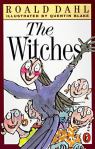
The Witches by Roald Dahl

My recent post on this fantastic author produced great feelings of childhood nostalgia. I'm hoping that experiencing a never-before-read Dahl text will result in the same feeling of wonder I felt when reading Charlie and the Chocolate Factory or James and the Giant Peach as a wee one.  

The film adaptation terrified me when I was young. Perhaps this is why I've never bothered to read the book. 


Victorian London by Liza Picard

I'm heartily enjoying my attempts to incorporate more non-fiction into my reading this year and would rather like to continue the practice. Liza Picard has written several portraits of London at various time periods in British History (I've read bits of her Restoration London), so I'm looking forward to experiencing that foggy Victorian metropolis through her words. 

Question: will I need an umbrella? No, a gas mask, I think, would be the order of the day -- the odour.    
                                         
Patronage by Maria Edgeworth

A contemporary of Jane Austen, Maria Edgeworth was wildly popular in early-nineteenth-century England. Patronage apparently sold its first run within hours. It's now largely out of print, so I snapped up this new edition by Sort Of Books at a Waterstone's in Leeds.

Known for her progressive views on race and gender, I'm excited to compare her representation of Regency society with those by Austen.    


Crossed by Ally Condie

Sometimes a girl needs a good escapist read. I enjoyed Matched, the first in this young adult trilogy. 

Hopefully the second installment will maintain the narrative momentum the author's got going.  

Bring on the love triangle!


The Mating Season by P.G. Wodehouse

I haven't read a Wodehouse novel in nearly six months! Naturally, this leads me to believe I am slowly dying on the inside and must restore a healthy balance to my anatomy with another Wodehouse text. As everybody knows, Wodehouse makes everything right in the world.

As I've previously confined myself to Blandings Castle stories, The Mating Season will be my first Jeeves novel. Such joy! (Click here for a hilarious passage from a Blandings novel.)


The Professor by Charlotte Brontë

So...I'm embarrassed to admit this, but I've never read The Professor. Like so many books, I started this assigned reading for my Brontë module at Leeds. However, I arrived in England a week late due to visa delays and other bureaucratic delights. Consequently, I never finished it. Shame! This is the only Brontë novel I haven't fully read, and I need to get on it. I can't wait to witness what I've termed  Charlotte Brontë Syndrome in full swing! 

  
Do you have any fun reading plans for spring? What are your thoughts, if any, on the titles I've listed above? Are you currently engrossed in a good book right now? Pass on the recommendations!

Wednesday, March 07, 2012

Judging a Book by Its Cover, A Top Ten Tuesday Post


I'm a bit late to the game on this one, but Jillian's post has inspired me to join this week's Top Ten Tuesday event hosted by The Broke and the Boookish. So I'm sharing my top ten favourite book covers, united by a theme of my choosing. This topic ties in perfectly with some thoughts I've been having recently about the old adage 'don't judge a book by its cover.'

I do just that and more often than I'd like to admit. I can't count how many times I've purchased a book simply because 'it's pretty' -- pretty being my adjective of choice when I impulsively splurge on yet another book I can't afford. This practice isn't always to my benefit. Sometimes I toss a 'pretty book' to the side after reading, realizing I've been the dupe of a clever design and marketing strategy.

Sometimes I get lucky.

Once upon a time, I had no intention of reading more of Charles Dickens's novels. My horrid remembrances of having Great Expectations forced upon me in middle school put me off him for good. Then these gorgeous clothbound editions of Penguin classics suddenly popped up on the shelves of the bookstore where I worked. This book lover was entranced by Coralie Bickford-Smith's stunning designs. I walked by that beautiful copy of Great Expectations, the very book I loathed beyond description, day after day. It called out to me every time I passed by, begging to be chosen. Finally, I caved and bought the damn thing -- it was just so pretty. (Are you noticing a trend with the pretty?)

Maybe, I thought, Dickens isn't so bad after all. Maybe I've misjudged him. While I thought about it, I picked up the clothbound Oliver Twist to accompany its Dickensian sibling. Just in case.

As the abundance of Dickens-themed posts on this blog will testify, I grew to love the author I previously despised. I credit Coralie Bickford-Smith with igniting that gradual change of heart. It was her 'pretty' book that urged me to give Dickens another chance. In honor of her influence on my reading habits, I would like to share ten of my favourite classic designs by Coralie Bickford-Smith. I own several of the series now and have every intention of adding to my collection.


I love the chandeliers on this cover of Great Expectations. The designs created for Charles Dickens texts are particular stellar.


The pocket watch, which Oliver is taught to steal under the tutelage of the Artful Dodger and the rest of Fagin's gang, seems like the perfect image to represent this novel. I'm admire all of the designs in this series, but Oliver Twist might be my favourite of the bunch.


The image of the birdcage is such a potent one in Bleak House. Miss Flite owns a menagerie of birds, whom she says will be released on the day of judgement. It also, I think, serves as an effective symbol for the ways in which various characters of the novel metaphorically cage themsleves to a limited existence through their obsessions with the case of Jarndyce and Jarndyce.


The knitting needles, I presume, are a direct reference to Madame Defarge. She has the stillness of the lion before it strikes. Her eerie calm, as she quietly sits knitting, presages the violent outbursts that occur later in the novel. She is a standout character in the fantastic A Tale of Two Cities. Indeed, Madame Defarge is one of my favourite characters in the whole of Dickens's oeuvre.


I'd been lusting after this edition of George Eliot's Middlemarch for months when my dear friend Liz gave it to me as a parting gift before I left England. Therefore, this design has a lovely sentimental value for me.


Clothbound editions of all Jane Austen's completed novels have been released. The intricacy of this design for Pride and Prejudice makes it, in my opinion, the best of the six.


Illustrating the flamingos who have day jobs as croquet mallets in Lewis Carroll's Alice's Adventures in Wonderland is pure brilliance. I love the bright-pink-on-white color scheme.


The peacock feather motif on this cover of The Picture of Dorian Gray by Oscar Wilde is simply gorgeous.


The design of Emily's Wuthering Heights is another favourite of mine, probably because the image of the rose illustrates the relationship between Cathy and Heathcliff nicely. It's beautiful but full of thorns. If Cathy and Heathcliff aren't prickly, I don't know who in fiction is.


And finally...Charlotte's Jane Eyre. I have a soft spot for this cover, because Jane Eyre may possibly be my favourite novel of all time. Also, it's red, a color that makes everything vibrant.


Penguin hosted a live web chat with Coralie Bickford-Smith a few months ago, and she kindly answered my question about the extent to which the narratives of the novels influence her designs. It was fascinating to hear about the creative process behind this aesthetic series. Here is her reply:

I try to read all the books I design covers for but sometimes (due to time constraints) it is just not possible and I go to the blurbs team for a chat to bounce ideas off. For me the narrative influences my creative process massively. For the hardback classics some of the final patterns are more literal than others. The peacock feather on Dorian Grey, for example, plays on the book’s themes of vanity and the superficial, whereas the leaf motif on Jane Eyre, refers directly to the lightning-blasted chestnut tree, a concrete element in the text that serves as a potent symbol of the book’s central relationship.

So, buying books simply because they would look dashing on my shelves does occasionally lead me astray. Yet it has also opened my eyes to fabulous books I wouldn't otherwise have read and helped me to reconsider my opinions on literature. Judging a book by its cover is a practice I'll happily continue.

Do you ever embrace or reject books simply because of their covers? I'd love to hear!